First period essentials: a calm checklist (pads, pain relief, school plan)
Quick answer
Your first period can feel surprising, even if you knew it was coming. The goal is simple: have a few basics ready, know what to do if it starts at school, and understand what’s common at the beginning. You don’t need a perfect routine or expensive products. A small kit, a calm plan, and one trusted adult usually make everything feel much easier.
Key points
- A first period is often light at first, and cycles can be irregular in the beginning.
- Pads are the easiest “starter option” for many people.
- Period pain is common, and there are gentle ways to help.
- A school plan reduces panic (where to go, who to tell, what to carry).
- You should get extra help if bleeding is very heavy, pain is severe, or you feel faint.
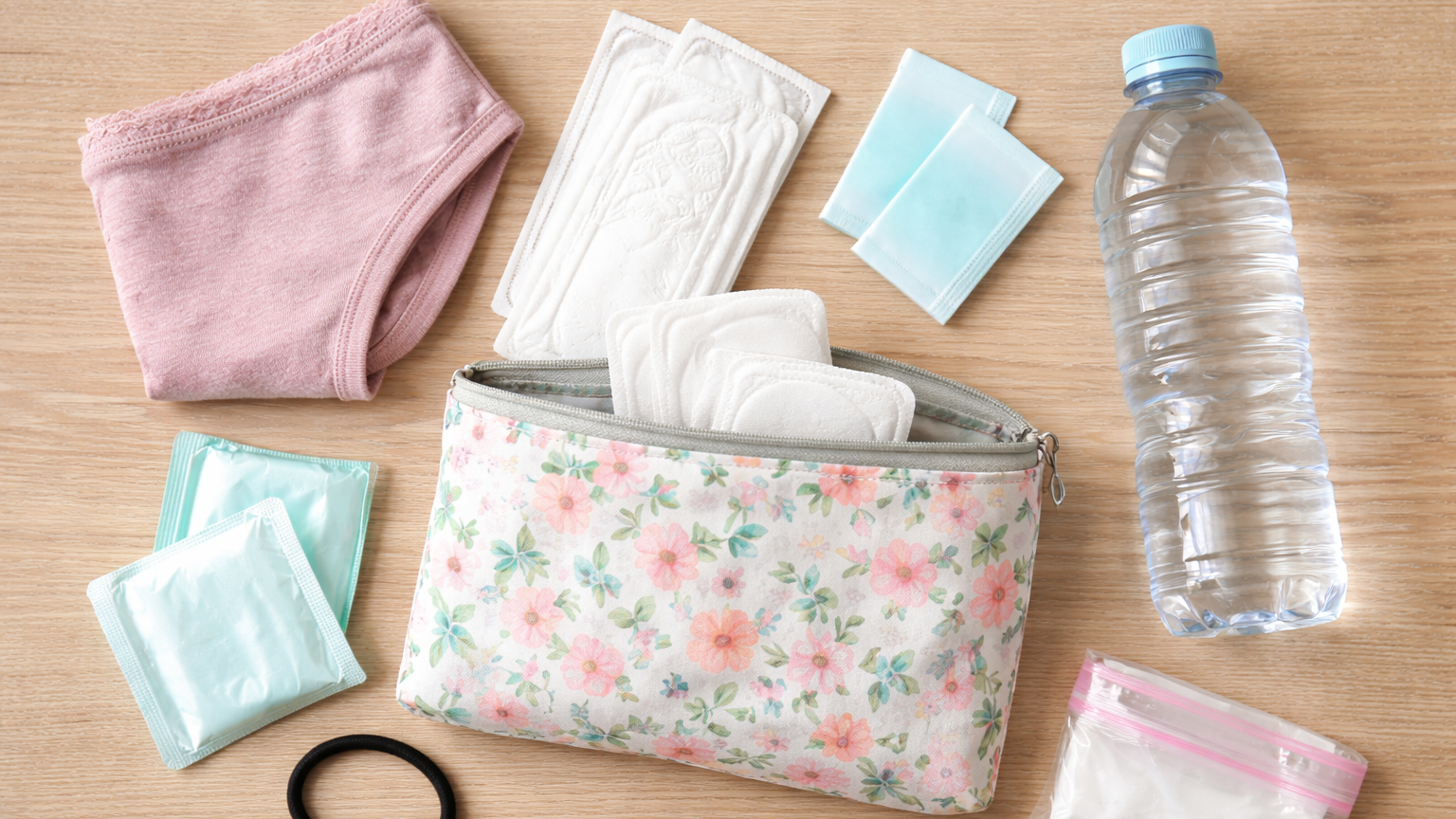
Your calm first-period checklist
What to have at home
- Pads (a small pack is enough to start)
- Comfortable underwear (a couple of pairs you don’t mind)
- A small bin or disposal bags (any small bag works)
- A hot water bottle or heat pack (for cramps)
- A simple way to track dates (notes app or calendar)
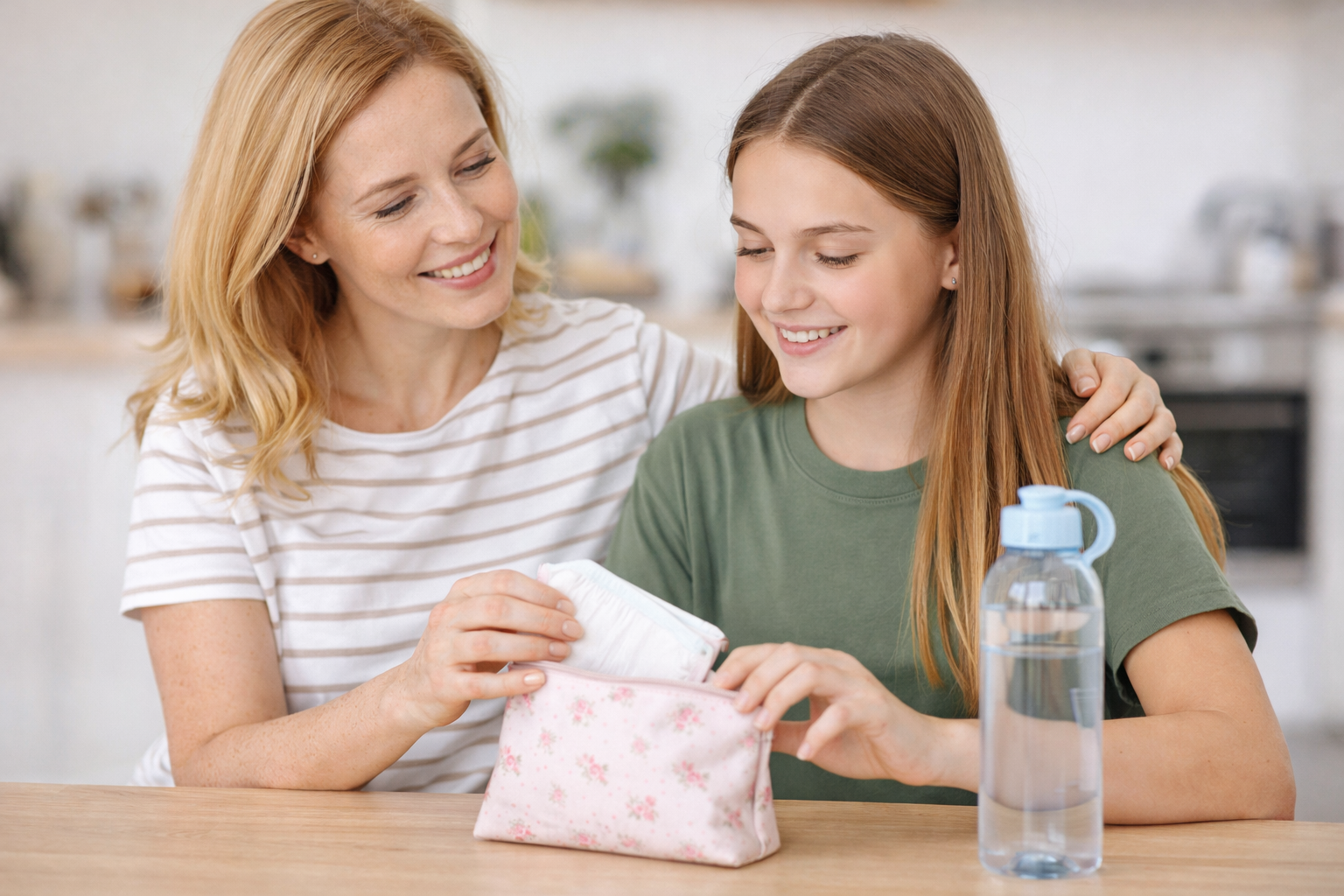
What to keep in a “just-in-case” school kit
- 2–3 pads
- Spare underwear (rolled tight in a small bag)
- Small pack of tissues
- A small zip pouch (so it looks like any normal bag)
- Optional: gentle wipes (not necessary, but some people like them)
- Optional: a small, sealable bag for used items if there’s no bin
Pain relief that’s sensible and safe
- Heat helps many people (hot water bottle/heat pack on your tummy or lower back)
- Gentle movement can help (a short walk, stretching)
- If you use pain relief, follow the packet instructions and check with a parent/carer or a pharmacist if you’re unsure
- Rest, water, and a snack can make cramps feel more manageable
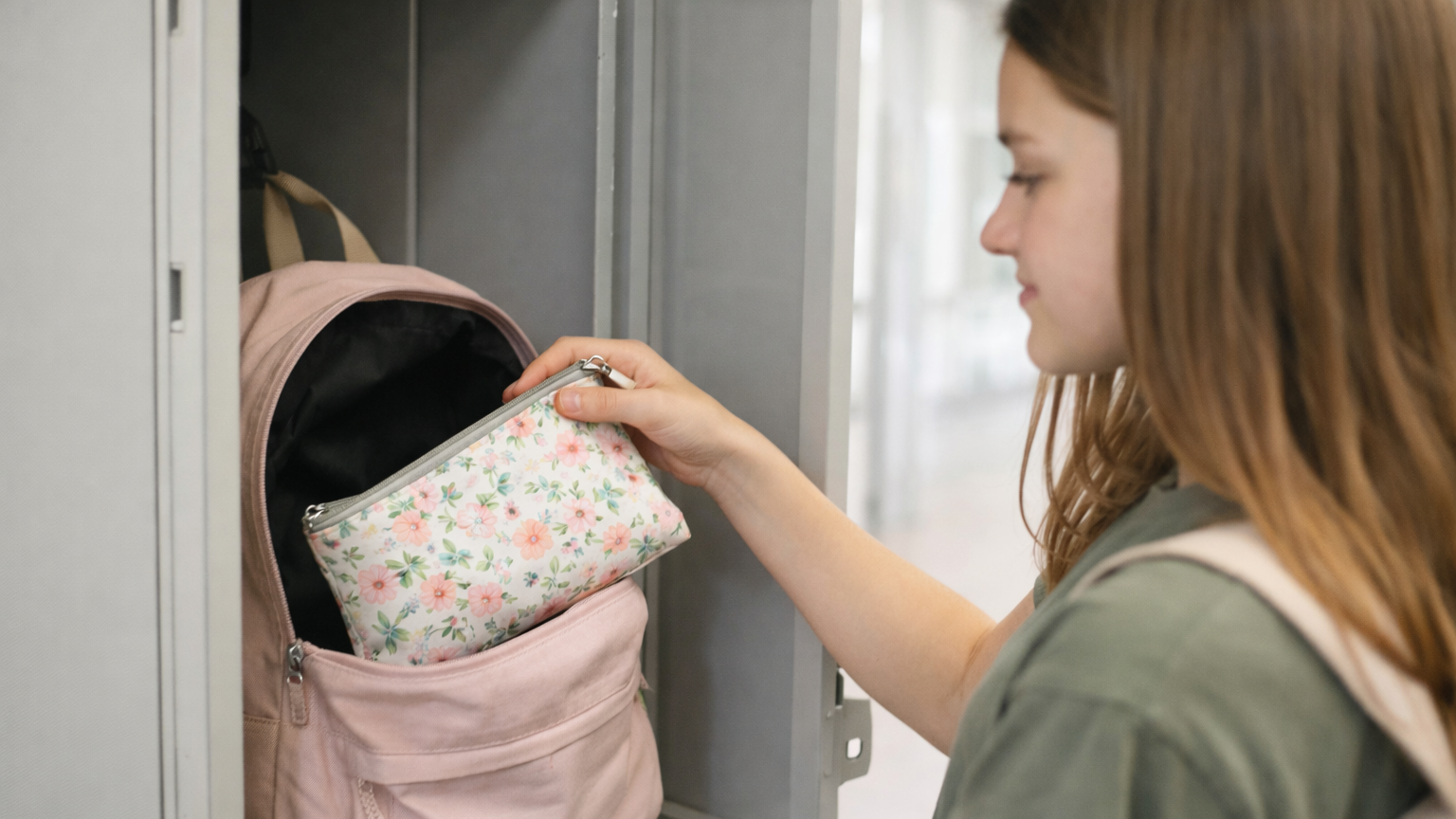
If it starts at school (a simple plan)
- Go to the toilet, breathe, and use a pad (or ask a friend/teacher for one)
- If you don’t have a pad: folded toilet paper in underwear can work as a temporary backup until you get supplies
- Choose a trusted adult at school (form tutor, school nurse, reception) who can help without making it a big thing
- If you stain clothes: tie a jumper around your waist and ask to call home if you want
- Remember: this happens to lots of people. Most schools have supplies somewhere.
What’s normal / common at the beginning
- The first few periods can be light, stop and start, or be irregular
- Mild to moderate cramps can happen
- You might feel tired, emotional, or more sensitive than usual
- You can have some clear/white discharge before periods begin
- One person’s “normal” can look different from another’s — comparison doesn’t help much here
What can help (easy habits that add comfort)
- Keep a spare pad and underwear in your bag even when you’re not on your period
- Wear darker bottoms on days you feel unsure (it can reduce worry)
- Plan a “bathroom check” at school break times
- Try a period tracker just for dates (you don’t need to log everything)
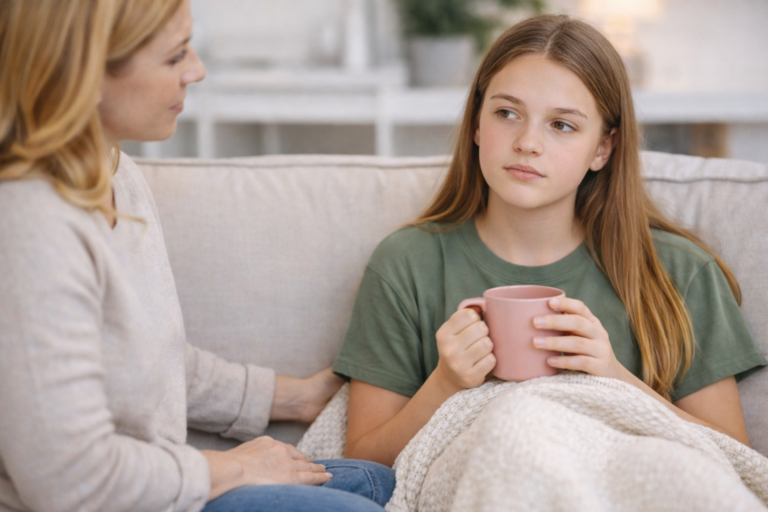
- Talk to one safe person so you’re not carrying it alone
When to seek extra help
Consider speaking to a GP / health professional if:
- Bleeding feels very heavy or hard to manage (for example, you’re soaking through pads very quickly)
- Pain is severe, makes you miss school regularly, or doesn’t improve with usual comfort steps
- You feel faint, dizzy, or unwell with bleeding
- You have ongoing symptoms that worry you (strong unpleasant smell, itching, burning, unusual pain)
- Your mood becomes persistently low or anxious around your cycle and it affects everyday life
For parents/caregivers: what to say / what to watch
What to say
- “We’ll make a small kit so you feel prepared. No pressure to do anything perfectly.”
- “If it starts at school, you can go to the toilet, use a pad, and ask a trusted adult. It’s normal.”
- “Pain is common — we can try heat, rest, and see what helps you.”
What to watch
- Very heavy bleeding, faintness, or pain that stops normal life
- Big anxiety about school or body changes
- Signs of bullying, teasing, or shame around periods
Note from Linda
A first period doesn’t have to be a “big moment” if you don’t want it to be. Prepared beats brave: a small pouch, a calm school plan, and someone safe to text.